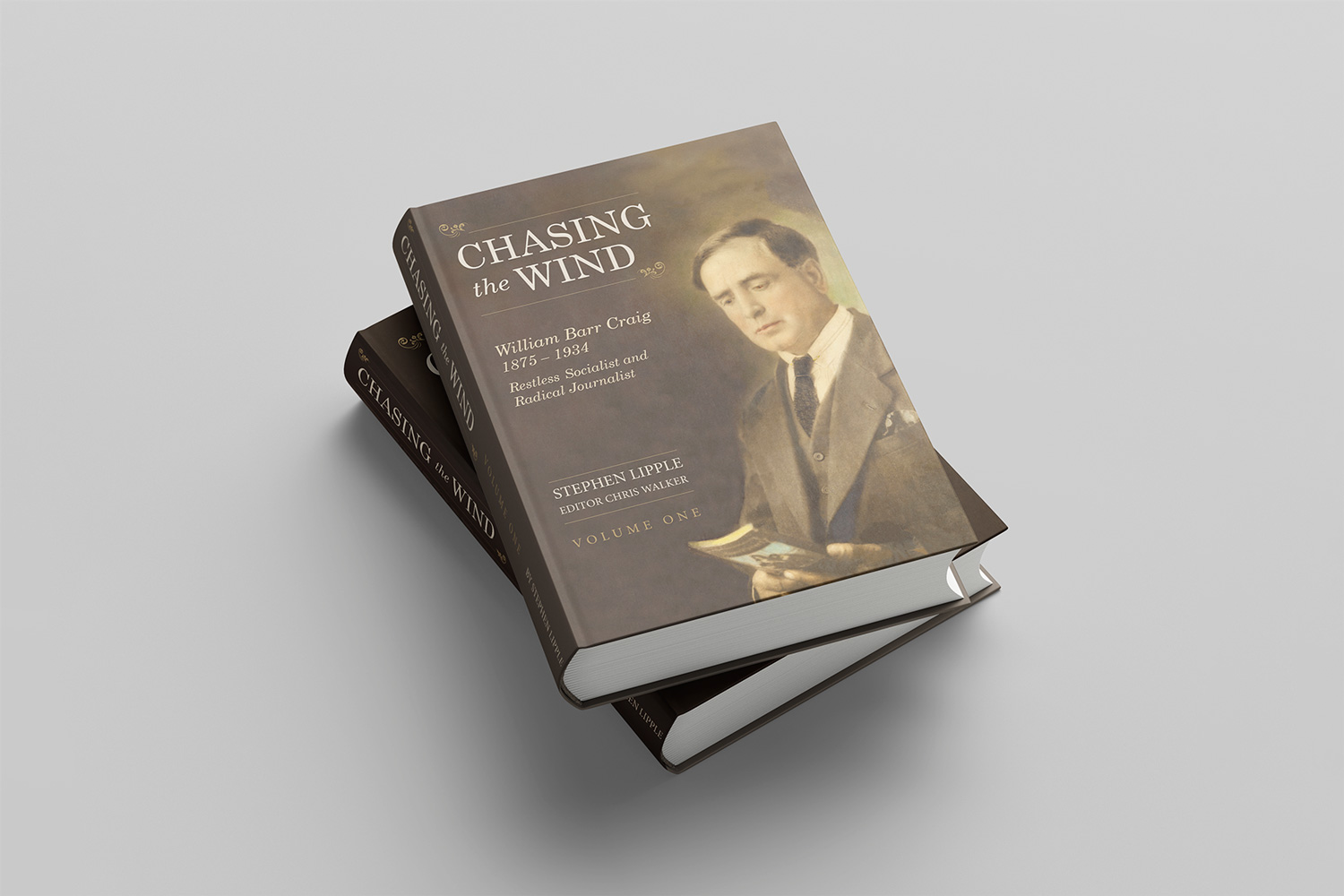
Chasing the Wind - Vol 1
William Barr Craig 1875-1934: Restless Socialist and Radical Journalist
By Stephen Lipple, edited by Chris Walker
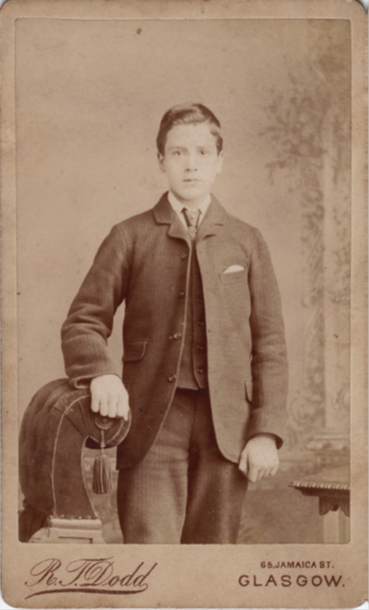
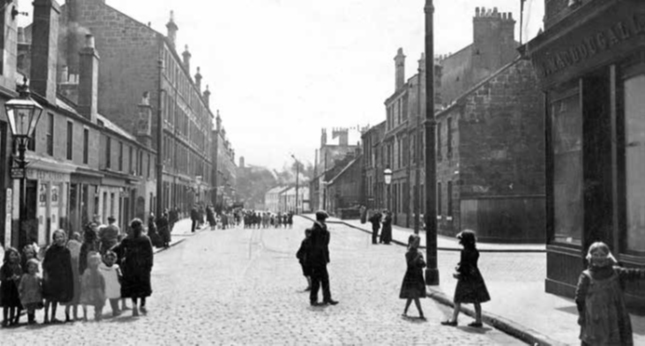
Born on 23 July 1875 at 14 Kirk Lane opposite the graveyard of his Craig forebears, his childhood was affected by the death of five of his nine siblings. Although his father John was a Church elder, he was afflicted and grieved by several bouts of protracted alcoholism. His mother Elizabeth was also affected by alcoholism and probably by depression. Wil’s later staunch support of Prohibition may have stemmed from his home experiences. Will was schooled at the local Pollok Academy. Here he and his brother James were friends with John Maclean, later the famous Scottish Socialist. After a thorough standard Scottish education, at age 15, Will was an apprentice butcher, still living at home at 39 King Street.
Around this time, he rejected the Christian beliefs of his parents and ceased to participate in their nearby Pollokshaws West Free Church. With life parallels to famous Socialist John Maclean,Will rebelled against his Reformation Christian heritage and upbringing. Socialism and Spiritualism early filled the void. His education expanded through reading widely, becoming well-versed in literature, poetry and the many books on philosophy, economics and politics of the day. As a young man, Will became involved in the Socialist propagandists, the Glasgow Clarion Scouts, also known as Clarionettes. From this period on, his self-education and transformation as a youth and young man is remarkable. He read avidly, becoming well-versed in literature, poetry and the many books on philosophy, economics and politics of the day.
Abandoning life as a butcher’s apprentice, by 1894, aged 18 or 19, Will left family and the familiar townscape of Pollokshaws for London, over 480 kilometres away. Here he learned typing and shorthand employed as a real estate clerk while immersing himself in the propaganda efforts of the Clarion Scouts associated with the popular national Socialist publication, The Clarion.
Regarding Wil as an energetic, talented young man who had gone to London to be where culture, society and power resided is not conjecture beyond rational bounds. In vernacular terms, he desired to ‘be where the action was’. In his vivid imagination wanting to be a heroic agent for change, he was doused with the unsung routine of clerical drudgery, so took comfort in the Socialist paper The Clarion – being a reader from 1895 – and his Socialist ideals, including promoting these through newspaper correspondence.
While in London, during 1898–1900 he was already very widely read and emerged as a capable writer of skill, flair and knowledge. By then, Will had altered his name to Wil Kraig. Though Wil was remote from home, he was not indifferent to local affairs. He was an active participant in polemical debates in newspaper columns, vigorous propagandist for Socialism and vociferous polemicist against traditional Biblical Christianity. Wil had 65 letters, essays and reviews published in his hometown paper with a readership wider than Pollokshaws, covering various subjects, but mostly either enthusiastically advocating Socialism coloured by deistic Romanticism, or attacking with vitriol, Christianity and the Holy Bible. Many of his articles in The Pollokshaws News were 2000–3000 words long, being favoured through his friendship with the owner and editor, Andrew McCallum. He contributed an unknown number of articles and letters to The Evening Citizen, Glasgow and The Clarion. His profuse work manifested his substantial and diverse talent as a confident writer, energetically forcing the Socialist cause, brooking no dissent from contrary perspectives. In temperament, Will was a Romantic Idealist and this coloured his political and Spiritualist religious perspective.
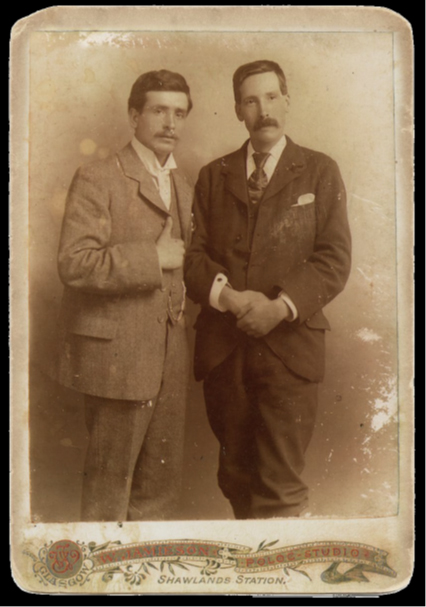
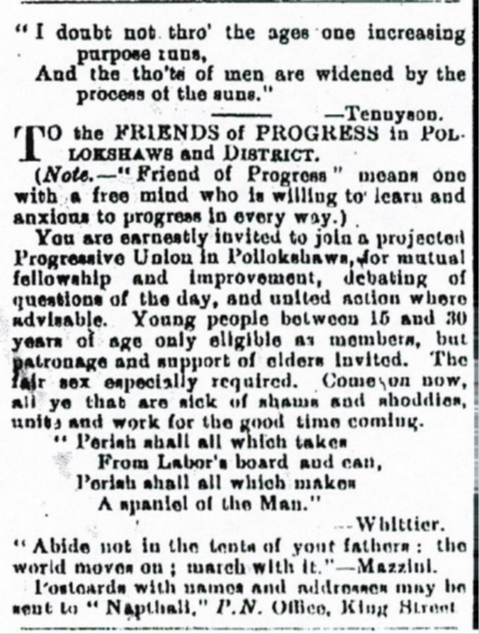
In London, Wil’s efforts to advance the march of Socialism were not limited to expressing his views in print. He gave his time, energy and money to creating a forum where Socialist ideas and comradeship could flourish. From the capital, in late 1899, Kraig founded a radical society and lecture forum, the Pollokshaws Progressive Union. He twice claimed that this had been his long-held desire. He galvanised his Socialist contacts into using it as a means of promoting their ideas through regular meetings to discuss and debate philosophy, science, literature, contemporary social problems, politics and religion. The society met at least 22 times in 1900 and had at least 29 members on its books during this year.
In 1900, at age 25, Wil decided to leave the United Kingdom and to seek a new life in the Antipodes. A new, grander vision had captured Wil’s imagination. He resolved, and encouraged others, to emigrate to New Zealand as one of the 200 young Clarionettes in a venture organised through The Clarion. Before boarding the Rakaia for the journey to New Zealand, Kraig briefly returned to Pollokshaws, presumably to visit friends and family. A farewell function was held for Wil, attended by ideological kindred who shared Wil’s political, social and philosophical convictions, as well as those with whom Will had locked horns in the columns of his local newspaper. Andrew McCallum, Editor of The Pollokshaws News, summarised the evening thus:
Wonderful things do happen in this queer old town. After the great battle which was fought (in print) between Mr Frank Peard and Mr Wil Kraig, and the prophesies of mutual destruction when they met face to face on the platform, and in presence of an impartial audience, who would have thought that when these gladiators did at last meet it would have been (metaphorical) to fall on each other’s neck, and swear that they would be friends for ever and ever, world without end. Yet so it was. Friends true and staunch, and all the friendlier because each will retain his own opinions and respect the opinions of the other.
This magnificent result was brought about by the farewell banquet which was held in Pollokshaws last Friday evening. Mr Kraig is going abroad, and his friends arranged a feast – not only of the good things of the earth, but of wit and humour and good fellowship – in his honour. Mr Peard was invited to join in the compliment, and being nothing if not magnanimous, he gladly came to swell the praises of a foeman who he had found so worthy of his steel. In his speech Mr Peard predicted a great future for Mr Kraig, no less than a seat in the New Zealand House of Commons, and then he pictured himself, having also emigrated and risen to a position of power and influence, seated on the opposite side from his friend, debating the great questions which affect the welfare of the people in that part of Her Majesty’s dominions.
Though heady and overblown, Mr Peard’s sentiment may have matched Kraig the idealist’s dreams and aspirations for this new chapter in his life. Unknown to him, he would never make a return journey and never see his parents, siblings or his associates again. Having roused his Socialist beliefs by publishing them in the press and socialising them in gatherings, beyond Pollokshaws and beyond his youth, Kraig carried his Socialist worldview to the ends of the earth and for the term of his life.
Wil enjoyed the camaraderie with his fellow Socialists, engaging in and fostering the shipboard entertainments. He posted home a series of delightful lyrical accounts of the voyage, which were published in The Pollokshaws News. The journey included eight days of gales beyond the Cape of Good Hope. During this time the steering gear failed requiring the passengers to be kept below decks for nineteen hours but Wil was not unnerved.
Wil never returned to Britain.
Orders for the first two volumes are invited per the email address below
Specifications of the first two volumes are:
Title:
CHASING the WIND: William Barr Craig 1875 – 1934.
Restless Socialist and Radical Journalist
Author:
Stephen Lipple
Editor:
Chris Walker
Design:Flametree Creative,
459 Stirling Highway, Cottesloe Western Australia 6011;
flametreecreative.com.au
Size:
260 mm high x 215 mm wide
Paper:
130 gsm matt art
Cover:
2400UM Board with Black Wiblin (cloth-like paper) with gold foiling of the title, ‘Chasing the Wind’ on the front cover and spine then jacketed in a 170 gsm colour jacket matt laminated.
Text font:
Times New Roman 10/13 pt Headings: Century Schoolbook
Price:
Two volume set AUD$150.00 plus packing and postage
Volume 1:
ISBN 978-0-6487244-0-7 (pending registration) c. 650 pages
Volume 2:
ISBN 978-0-6487244-1-4 (pending registration) c. 500 pages